

New posts
09:48
Reports: US Mulls Reallocating Iranian Assets To Rebuild Gulf Allies
The United States is considering using Iranian financial assets to help fund repairs and reconstruction in Gulf countries damaged by Iranian strikes, US media reported on June 6, citing unnamed sources familiar with the discussions.
Reports by ABC News, CNN, and other outlets said Treasury Secretary Scott Bessent has instructed his department to assess the cost of damage caused by Iranian missile and drone attacks on US allies, including Kuwait and Bahrain. The aim, according to the sources, is to determine whether Iranian funds could be redirected to cover reconstruction -- and possibly any future damage should fighting resume.
No details have been disclosed about which assets might be targeted or how such a move would be implemented. It remains unclear whether the review is limited to Iranian funds already frozen under US sanctions or could extend to other Iranian holdings held abroad.
The reported discussions come as Iran is pressing Washington to release billions of dollars in overseas assets as part of any agreement to end the conflict.
The assets mainly consist of Iranian oil revenues and state funds held in foreign accounts, frozen under US sanctions dating back largely to 2018 and reinforced since then.
Senior Iranian officials have said access to about $24 billion in frozen fundsis essential for a peace deal, a demand the United States has so far rejected.
The reported discussions come as Iran is pressing Washington to release billions of dollars in overseas assets as part of any agreement to end the conflict.
Senior Iranian officials have said access to about $24 billion in frozen funds is essential for a peace deal, a demand the United States has so far rejected.
ShareCopy link
Facebook
X (Twitter)
LinkedIn
Email
Share
02:22
Pakistani Minister Arrives In Tehran To Press Struggling Peace Process
Pakistani Interior Minister Mohsin Naqvi has arrived in Tehran as part of Islamabad's diplomatic drive to bring an end to the US war with Iran, even as new attacks were reported over the previous 24 hours.
News agency dpa cited Pakistani security and diplomatic sources as saying high-level meetings with Iranian government officials were planned for June 7. Naqvi last visited Tehran in mid-May.
The Iranian state broadcaster IRIB reported that Naqvi would meet with Iranian President Masud Pezeshkian and Foreign Minister Abbas Araqchi.
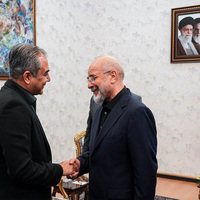
Iranian President Masud Pezeshkian and Pakistani Interior Minister Mohsin Naqvi in Tehran during a May 17 meeting.
Iran's ISNA news agency reported that Naqvi was expected to deliver a message from powerful Pakistani Army chief Asim Munir to Iranian Supreme Leader Mojtaba Khamenei.
Munir has taken a lead role in Islamabad's efforts to mediate talks between Tehran and Washington.
Although a shaky cease-fire has officially held, US and Iranian forces have conducted military operations several times since the April 8 beginning of the truce.
Late on June 6, US Central Command (CENTCOM)said its forcesin the Middle East shot down two Iranian attack drones that threatened international maritime traffic in the Strait of Hormuz.
Earlier in the day, CENTCOM said it hit Iranian coastal radar stations in"self-defense"strikes hours after Tehran launched attack drones toward the Strait of Hormuz.
Iran's hard-line Islamic Revolutionary Guards Corps (IRGC) then retaliated for those strikes by firing at least seven ballistic missiles toward US-linked sites in Kuwait and Bahrain.
Meanwhile, Reuters and ABC TV were among media outlets citing sources saying that US Treasury Secretary Scott Bessent has directed a team to assess costs for damage inflicted on Gulf allies by Iran and that Washington will consider using Iranian assets to undertake repairs.
ShareCopy link
Facebook
X (Twitter)
LinkedIn
Email
Share
21:18
6.6.2026
Lebanese Army Chief To Meet Pakistani Counterpart Amid Ongoing Negotiations Between US And Iran
Lebanese army chief Rodolphe Haykal has departed for Pakistan, where he is set to meet his counterpart, Asim Munir, the country's military said. Citing a source familiar with the matter, AFP reported that the visit is linked to negotiations between the United States and Iran.
Haykal "left Lebanon for the Islamic Republic of Pakistan, at the invitation of his Pakistani counterpart, Field Marshal Syed Asim Munir," a Lebanese military statement said on June 6.
SEE ALSO:
Any Iran Deal Must Be Measured By Actions, Not Promises, Says Former Ambassador Lisa Gable
AFP cited a source, who said that Haykal's visit is "linked to the Pakistani mediation to resolve" issues between Washington and Tehran, that are negotiating a potential peace agreement to bring an end to the broader conflict in the Middle East.
"Lebanon is a critical part of the negotiations," the source added, and Munir, who is scheduled to meet Haykal in Pakistan, is seen as Islamabad's key negotiator.
While talks between the United States and Iran have appeared to stall over key issues such as the reopening of the Strait of Hormuz, a waterway crucial to global energy markets, and Tehran's nuclear ambitions, Iranian officials have maintained that the conflict between Israel and Lebanon is also central to efforts to end the regional war.
SEE ALSO:
Trump Says US Will Win 'Militarily Or On Paper,' Could Meet Iran Supreme Leader If There's Deal
Tel Aviv has been launching strikes targeting Hezbollah militants in Lebanon since March 2, two days after the start of the US-Israeli war with Iran, when Hezbollah forces opened fire in support of Tehran.
Hezbollah is a militant group and political party that controls much of southern Lebanon. It is considered a terrorist organization by the United States, while the European Union has only blacklisted its armed wing.
A truce that has been in place since April 17 has reduced fighting between Israel and Hezbollah but has not stopped it; hundreds of people have been killed in strikes since then, and each side has accused the other of numerous violations.
ShareCopy link
Facebook
X (Twitter)
LinkedIn
Email
Share
14:41
6.6.2026
Kuwait Says It Was Targeted by Seven Iranian Missiles Overnight
Iran fired seven ballistic missiles at Kuwait overnight, authorities said, and falling debris caused some damage on the ground, but no casualties.
The June 6 attack came just days after an Iranian strike on the Gulf states international airport killed one person and injured 63 others. The attack was the latest sign that a cease-fire announced two months ago by the United States remained fragile.
In a statement, Kuwaits military said it had intercepted the seven missiles at dawn over Kuwaiti airspace, with some debris falling on residential areas.
No further details were provided. There was no immediate comment from Iran.
Earlier, Kuwait's Foreign Ministry condemned the attacks as a flagrant violation of the sovereignty of the state and that they represented a dangerous escalation.
Iran has repeatedly targeted several Gulf State nations -- mainly US allies -- with drones and missiles over the course of the war, which erupted on February 28 when US and Israeli forces launched air strikes on Iran.
Bahrain, which hosts the headquarters of the US Fifth Fleet,said it also was targeted by Iranian missiles,though it gave no details as to when and where, or whether there was damage or casualties.
Earlier, US Central Command -- the Pentagon entity overseeing US forces in the Middle East --confirmed the launch of seven Iranian missiles at Kuwait,and said six were intercepted, while the seventh did not reach its intended target.
ShareCopy link
Facebook
X (Twitter)
LinkedIn
Email
Share
12:49
6.6.2026
Iranian Soccer Federation President Won't Be Allowed To Attend World Cup
While Iran's national soccer team players have received visas to attend the World Cup in the United States after months of uncertainty,The New York Times reportedthat the visa application of Mehdi Taj, the president of Iran's soccer federation, has been rejected.
Citing four senior officials, The New York Times reported that the applications of all 26 Iranian players were accepted but more than a dozen members of the support staff and federation officials who were supposed to accompany the team have not been allowed to enter the United States.
Taj was previously a commander in Iran's Islamic Revolutionary Guards Corps (IRGC), which the US and Canada have designated a terrorist organization.
Hours earlier, the Fars news agency, which is linked to the IRGC, wrote that visas for some members of the national team's technical and executive staff have not yet been issued and "the US embassy had so far refused to issue them."
Iran's national team is scheduled to play its first match on June 15 in Los Angeles against New Zealand.
UPDATE: The Iranian Embassy in South Africa has this to say:
ShareCopy link
Facebook
X (Twitter)
LinkedIn
Email
Share
10:34
6.6.2026
Iranian Official Signals $24 Billion In Frozen Assets Key To Peace Talks
A top adviser to Irans supreme leader signaled that Tehran regaining access to $24 billion in assets frozen by Washington was a key demand in peace negotiations.
Speaking in an interview with CNN, Mohsen Rezaei also issued an unspecified threat, saying the United States would enter into a dark corridor should President Donald Trump order a resumption of attacks on Iran.
The negotiations are at a deadlock and Trump must break this deadlock, Rezaei, a military adviser to Supreme Leader Mojtaba Khamenei, said in the June 5 interview. The ball is in Trumps court.
Rezaei, who previously also served as the commander in chief of the Islamic Revolutionary Guards Corps, said Iranian negotiators have repeatedly demanded the release of the Iranian assets, which have been frozen for years.
If [Trump] wants to reach an agreement with Iran, this $24 billion is a test of trust that Iran wants to have with Trump -- this is a test that America must pass and the path will be opened, he was quoted as saying. This is our own money, not Americas money.
A two-month cease-fire declared by Trump continues to hold, though both US and Iranian forces have traded small-scale attacks in recent weeks.
Washington and Tehran have gone back and forth with competing proposals and counterproposals.
Aside from the question of Irans frozen assets, the other major obstacles are the fate of Irans nuclear program, including its highly enriched uranium, and reopening the Strait of Hormuz to commercial ship traffic.
ShareCopy link
Facebook
X (Twitter)
LinkedIn
Email
Share
09:44
6.6.2026
CENTCOM: Iran Did Not Damage US 5th Fleet Headquarters In Bahrain
CENTCOM, the US Central Command, has said that "Iranian claims of damaging US 5th Fleet headquarters in Bahrain are false."
Irans Islamic Revolutionary Guards Corps (IRGC) on June 5 said that its forces damaged the headquarters of the US 5th Fleet in Bahrain with missile and drone strikes.
The US 5th Fleet is headquartered in Manama, Bahrains capital, and oversees US naval operations across the Persian Gulf, the Strait of Hormuz, the Red Sea, the Arabian Sea, and parts of the Indian Ocean.
In a post on X, CENTCOM said: US forces intercepted multiple Iranian ballistic missiles and drones launched by Iran toward the Strait of Hormuz and Gulf neighbors" on June 5.
Initial assessments indicate six of the missiles launched by Iran were intercepted and a seventh did not reach its intended target. There are currently no reports of harm to US personnel, the statement read.
ShareCopy link
Facebook
X (Twitter)
LinkedIn
Email
Share
03:35
6.6.2026
Kuwaiti Military Responding to 'Hostile' Missiles, Drones; Bahrain Sirens Blare
Kuwaiti authorities on June 6 said the small Gulf nation's military was responding to "hostile" missile and drone attacks, three days after an Iranian strike on the international airport killed one person and injured 63 others.
"Kuwaiti air defenses are currently confronting hostile missile and drone attacks," thearmy said on X.
The army's General Staff warned that if explosion sounds are heard, "they are the result of air defense systems intercepting the hostile attacks."
Kuwaiti officials inspect damage at the international airport after an Iranian attack on June 3.
The statement did not specify the origin of the missiles and drones, but on June 3, the country's interior minister called the deadly attack on the country's airport "a heinous Iranian aggression."
Separately, the Bahrain Interior Ministry early on June 6 said that air raid sirens were sounded throughout the Gulf nation, also a US ally. Details were not immediately available.
Iran's hard-line Islamic Revolutionary Guards Corps (IRGC) early on June 6 claimed that it had fired air-launched missiles toward US bases in the region. Kuwait and Bahrain both host US military assets.
Oil-rich Kuwait has often been a target of Iranian missile and drone attacks since the start of the US-Israeli war with Iran at the end of February.
The latest strike comes after theUS State Department announcedthat the Trump administration had approved a possible $1.98 billion foreign military sale to Kuwait for counter-unmanned aerial systems platforms and related equipment.
The approval does not mean a contract has been signed or that negotiations have concluded. Congressional notification is required for major foreign military sales.
ShareCopy link
Facebook
X (Twitter)
LinkedIn
Email
Share
01:27
6.6.2026
US Approves $2 Billion Drone Killer Weapons Sale to Kuwait
WASHINGTON -- The Trump administration has approved a possible $1.98 billion foreign military sale to Gulf ally Kuwait for counter-unmanned aerial systems platforms and related equipment, the State Department said.
Kuwait, which hosts US military assets, has often been the target of Iranian missile and drone attacks, including what Secretary of State Marco Rubio condemned as "outrageous and unacceptable" attacks on the country'sinternational airportthat killed one person and injured 63 on June 3.
The Anduril Roadrunner unmanned aircraft.
The proposed deal includes Roadrunner and Anvil counter-drone systems, launch boxes, command-and-control systems, long-range sentry towers, electromagnetic warfare equipment, tactical operations centers, training, software development and logistical support, according to a State Departmentnotificationto Congress.
Washington said the sale would support US foreign policy and national security objectives by strengthening the security of Kuwait, a major non-NATO ally, and enhancing its ability to counter current and future threats posed by unmanned aerial systems.
The State Department said Kuwait would be able to integrate the systems into its military police forces and that the proposed sale would not alter the basic military balance in the region.
The approval does not mean a contract has been signed or that negotiations have concluded. Congressional notification is required for major foreign military sales.
ShareCopy link
Facebook
X (Twitter)
LinkedIn
Email
Share
00:37
6.6.2026
US, Iran Exchange Military Strikes, Further Imperiling Shaky Cease-Fire
The US military and Iranian forces exchanged tit-for-tat strikes early on June 6, further endangering the shaky cease-fire as peace negotiations appear to be at an impasse.
US Central Command (CENTCOM) said it hit Iranian coastal radar stations in "self-defense" strikes hours after Tehran launched attack drones toward the Strait of Hormuz.
Iran's hard-line Islamic Revolutionary Guards Corps (IRGC) then retaliated for those strikes by firing at least seven ballistic missiles toward US-linked sites in Kuwait and Bahrain.
"Moments ago, CENTCOM forces shot down four Iranian one-way attack drones that were launched toward the Strait of Hormuz," Central Command, which is responsible for US military operations in the Middle East,wrote on X.
SEE ALSO:
Any Iran Deal Must Be Measured By Actions, Not Promises, Says Former Ambassador Lisa Gable
"The attack drones posed an immediate threat to regional maritime traffic. US forces subsequently struck Iranian coastal surveillance radar sites in Goruk and on Qeshm Island to defend against further attacks," it said.
"American forces remain vigilant and postured to respond to unjustified Iranian aggression in self-defense," it added.
The US operation marks at least the fourth publicly announced US "self-defense" strike against Iranian targets since the cease-fire took effect in early April.
US President Donald Trump on June 5 said Iran likely retains 21-22 percent of its prewar missile stock.
Following the latest strike, Iran's powerful IRGC said it targeted US bases in the region with missiles in retaliation.Kuwaiti authoritiesreported incoming projectiles, while air raid sirens were blaring early on June 6 in nearby Bahrain.
CENTCOM saidinitial assessmentsindicate its forces intercepted six Iranian ballistic missiles fired toward Kuwait and Bahrain and that a seventh one did not reach its target. It said the likely target in Bahrain, the US Navy's Fifth Fleet headquarters, did not suffer any damages.
CNN earlier quoted an unnamed US official as saying Iran had first launched multiple drones toward the Strait of Hormuz. US officials suspect the drones were targeting commercial vessels transiting regional waters or US forces operating in the area, the official told CNN.
Irans Mehr news agency said the launches were warning shots fired near the strait, adding that they were most likely linked to movement of US ships around the crucial waterway.
Trump: Iran Missile Stock Down To 21-22 Percent
Meanwhile, US President Donald Trump told NBC news that Tehran likely retains 21-22 percent of its prewar missile stock. Trump told NBC news that Iran has some missiles, they have some drones. I would say percentage wise, maybe 21-22 percents of their missiles. It's a lot of missiles, but it's not what it was when we first attacked."
Separately, during a visit to Wisconsin to campaign for Republican candidates, Trump told farmers worried about rising prices that the war could be ending soon. Trump has often expressed optimism about an end to the war, only to have peace talks break up with little progress.
"We're going to come out of Iran very quickly, and it's going to be strong one way or the other," Trump told a roundtable event in Chippewa Falls.
"Your fertilizer prices are going to go way down, just like they were four months ago."
With reporting by Washington correspondent Alex Raufoglu, Radio Farda, CNN, and ReutersShareCopy link
Facebook
X (Twitter)
LinkedIn
Email
Share
Load more