

Bulgaria has been one of Ukraine's most significant arms suppliers since the start of Russia's full-scale invasion in February 2022. That much has been known in general terms for some time. What has not been publicly discussed in detail until now is the scale and the method, specifically, how Sofia has used third countries as intermediaries to transfer Soviet-era heavy weaponry while maintaining a degree of official distance from the deliveries.
The picture comes from Bulgaria's own submissions to the UN Register of Conventional Arms (UNROCA), the international transparency mechanism through which countries voluntarily report their weapons exports and imports. Bulgaria has filed reports for , , and . Read together, they tell a story that goes well beyond the official aid packages announced in Sofia.
The indirect pipeline through Czechia and the UK
The most telling entries in the recent reports concern exports to the Czech Republic and the United Kingdom. Both are enthusiastic supporters of Ukraine, but neither has a plausible use for Bulgarian T-72 tanks, MT-LB armored personnel carriers, or Soviet-era self-propelled howitzers. Defense analysts, including the Ukrainian defense publication Defense Express, have drawn the logical conclusion: these two countries have been acting as logistics intermediaries, receiving the equipment formally and passing it to Ukraine.
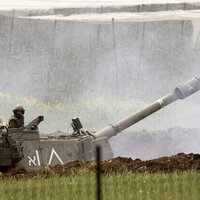
The 2025 report is the most detailed. That year, Bulgaria exported 65 armored vehicles to the Czech Republic, among them 22 T-72 tanks, 40 MT-LB tracked transporters, two HMMWV armored vehicles and one BMP-1 infantry fighting vehicle. Alongside these, 38 D-30 122mm howitzers went to Prague. To the UK, Bulgaria sent 18 self-propelled 2S1 Gvozdika howitzers, three MT-LB transporters and three BS-3 100mm anti-tank guns.
The 2024 report shows a similar pattern. That year, 11 MT-LB vehicles went to Czechia along with 144 artillery systems including BM-21 multiple rocket launchers, D-30 howitzers and 120mm mortars. Poland received 41 armored vehicles including 33 Gvozdika self-propelled howitzers and 8 MT-LBs.
Going back to 2022, the year the war began, the numbers are striking. Bulgaria sent 12 T-72 tanks and 31 BMP-1 infantry fighting vehicles to Czechia, along with 84 MT-LB vehicles to Poland, and 82 Gvozdika howitzers, 8 BM-21 rocket launchers and 6 D-20 152mm howitzers to Poland as well.
None of these reports list Ukraine as the final destination for this heavy equipment. The Czech Republic, the UK and Poland are named as the recipients. Whether that reflects the actual final destination or a deliberate structuring of the transfers to provide Bulgaria with political cover at home is not stated in the documents. The interpretation from Defense Express and others is that it reflects the latter.
Direct deliveries to Kyiv
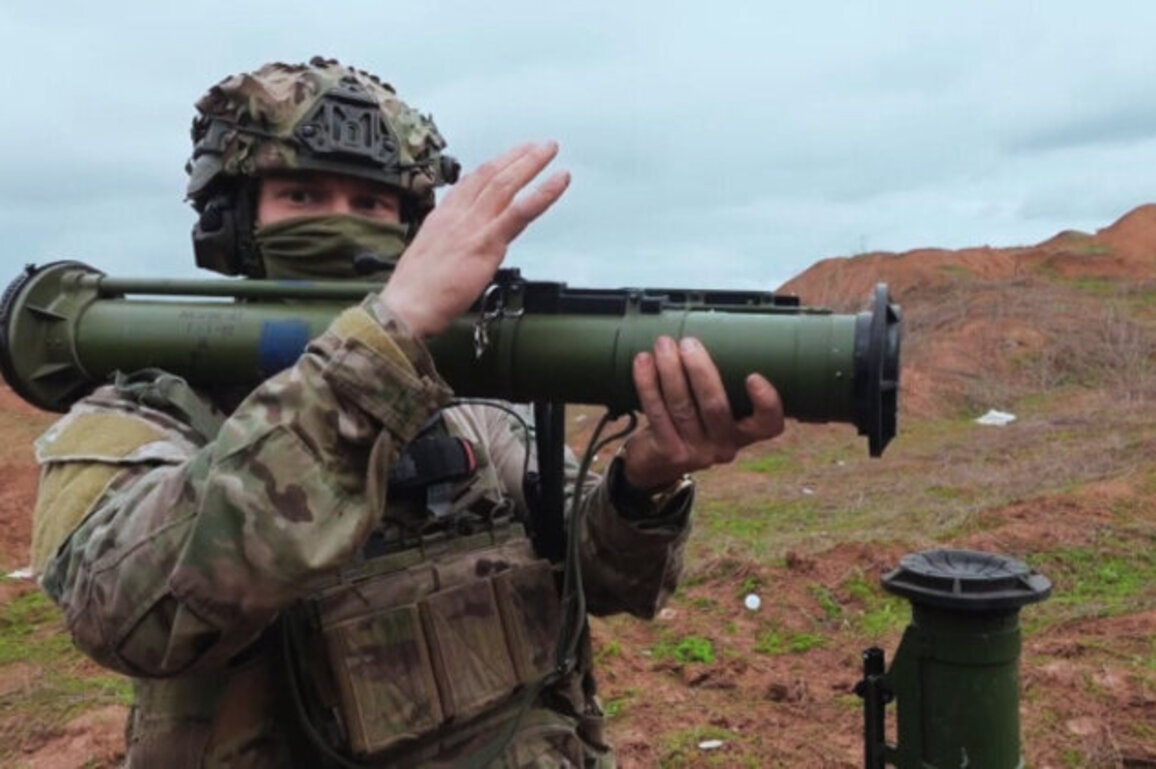
Alongside the indirect pipeline, Bulgaria has also sent weapons directly to Ukraine, listed as such in the UN reports. In 2025, direct deliveries included 3,000 Bulspike single-shot disposable anti-tank rocket launchers, 100 ATGL-L2 grenade launchers, 100 7.62mm light machine guns and 50 ZU-2 14.5mm anti-aircraft guns. In 2024, Ukraine received 1,000 Bulspike anti-tank launchers and 50 82mm mortars directly from Bulgaria.
The 2022 and 2023 reports do not list Ukraine as a direct recipient of weapons, though the indirect transfers through Poland, Czechia and Romania in those years are substantial. In 2023 alone, Poland received 26,000 anti-tank rocket launchers, 2,360 light machine guns and 6,950 grenade launchers from Bulgaria, while Romania received nearly 11,000 anti-tank launchers and 1,347 heavy machine guns. As with the heavy equipment transfers, the assumption among analysts is that a significant portion of these found their way to Ukrainian forces.
The early months and the financial scale
The importance of Bulgaria's contribution in the immediate aftermath of the invasion is hard to overstate. According to Defense Express, in the first six months of 2022, Bulgaria supplied approximately a third of all ammunition used by the Ukrainian military and close to 40 percent of the fuel consumed by Ukrainian armed forces. The total value of Bulgarian arms exports to Ukraine during that initial period, routed through the US and UK, reached an estimated 2.7 billion US dollars.
Those numbers have context in the broader picture of Bulgaria's defense export economy. At the HEMUS 2026 defense exhibition in Sofia, Deputy Economy Minister Mihaela Karadimova announced that Bulgarian defense exports reached nearly 2.5 billion euros in 2025, maintaining the level seen in 2024. She described the defense industrial base as a strategic national asset and called for deeper integration into European defense consortia and NATO supply chains.
Bulgaria also provided repair and maintenance services for damaged Ukrainian military equipment, a contribution that does not appear in the UNROCA data but has been noted separately.
What the documents do and do not show
A few important caveats apply to reading these reports. UNROCA covers major conventional arms and light weapons, but does not include artillery shells, small arms ammunition or other consumables, which form a substantial part of any modern military supply effort. The reports reflect what Bulgaria chose to declare, and the declared destination is not necessarily the final destination.
What they do show is a country that has been running one of the more substantial Soviet-era re-equipment operations in Europe, quietly and consistently, across multiple governments with different public positions on aid to Ukraine. The political debate in Bulgaria about whether and how much to help Kyiv has at various points been heated, particularly around direct military assistance. The UNROCA documents suggest that regardless of what was said publicly, the pipeline kept moving.
Whether Sofia will maintain this level of support going forward is a separate question. The new government under Prime Minister Radev has signaled caution about additional financial and military commitments, citing budget pressures. But the production lines at Bulgarian defense manufacturers are running, the export figures are holding, and the intermediary routes through Prague, Warsaw and London remain well established.